
The Feline Grimace Scale: A Simple Way to Tell If Your Cat Is in Pain
By Johanna
Published April 2, 2026
Cats don’t show pain the way we expect. No limping, no crying — often just small, easy-to-miss changes.
That’s why researchers at the University of Montreal developed the Feline Grimace Scale (FGS) — a practical, science-backed way to spot pain just by looking at your cat’s face.
What is the Feline Grimace Scale?
The Feline Grimace Scale (FGS) is a validated tool used to assess acute pain in cats based on facial expressions.
It works by observing small, measurable changes in a cat’s face — things most people wouldn’t consciously notice — and turning them into a clear score.
- It’s evidence-based (developed through years of clinical research)
- It’s fast and easy to use
- It works for both vets and cat owners
- It’s even available as a mobile app
In short: it helps answer the question “Is my cat in pain?”
Why this matters
Cats are wired to hide discomfort. By the time pain becomes obvious, it’s often already advanced.
The FGS helps:
- Detect pain earlier
- Make better treatment decisions
- Monitor whether pain medication is working
- Improve overall cat welfare
How it works (simple version)
The scale looks at 5 facial features, called “action units”:
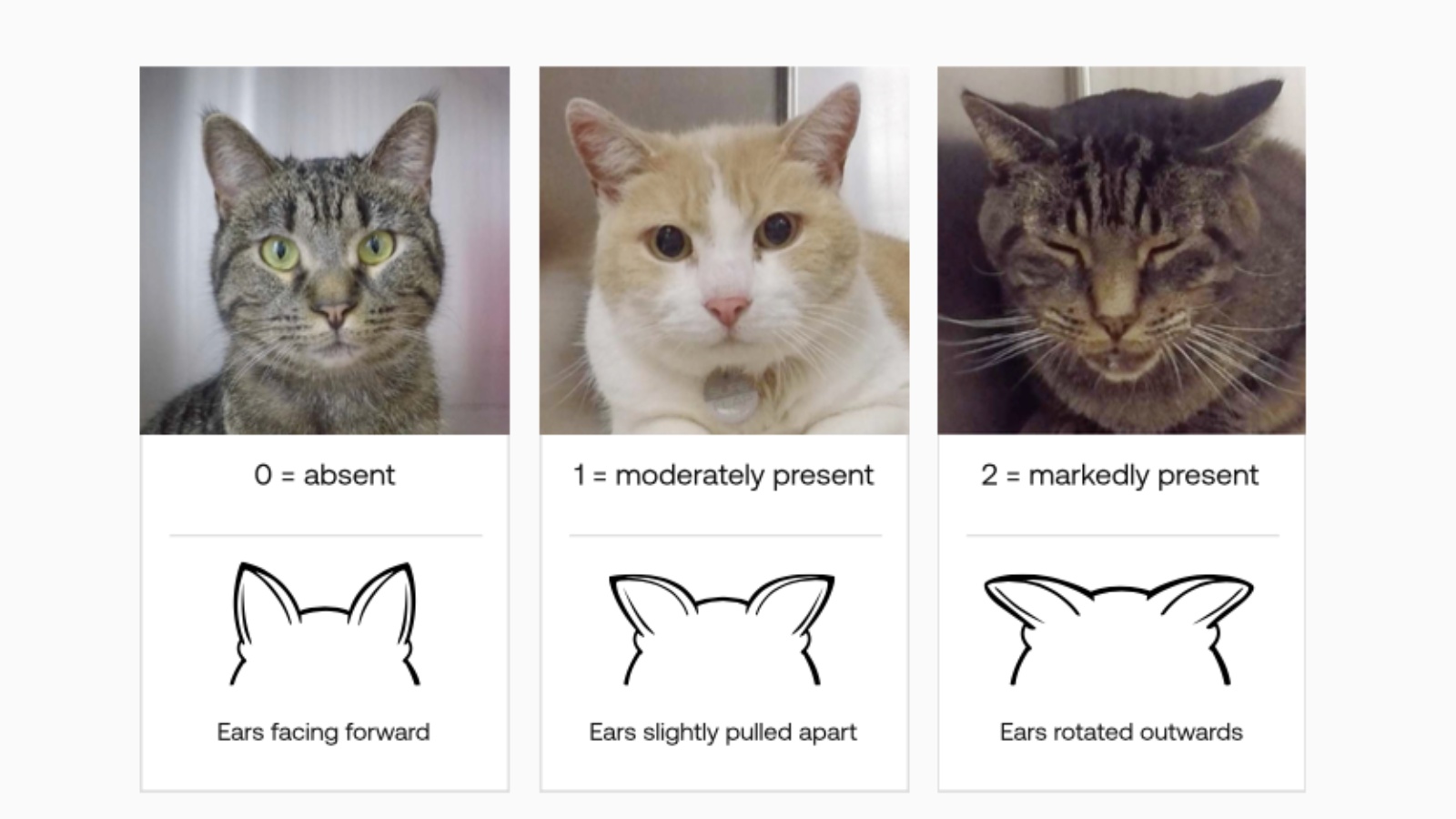
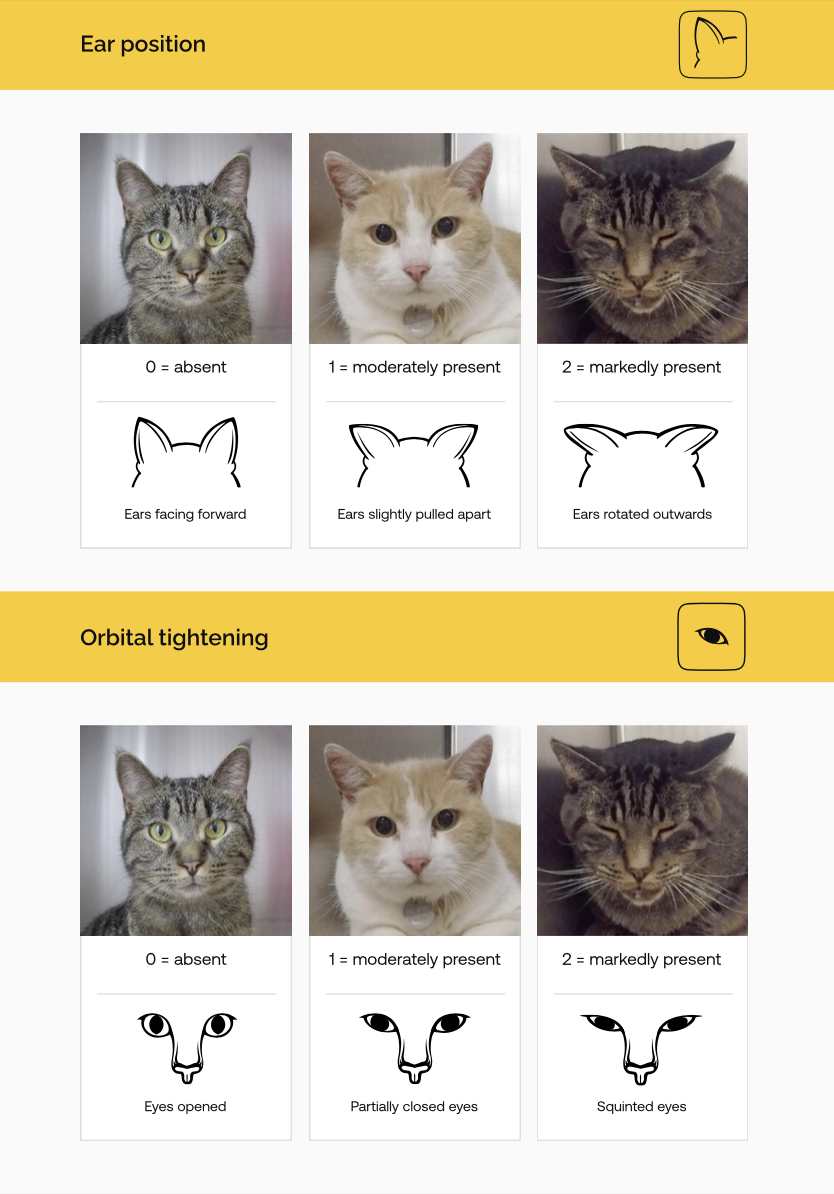
- Ears
- Eyes (orbital tightening)
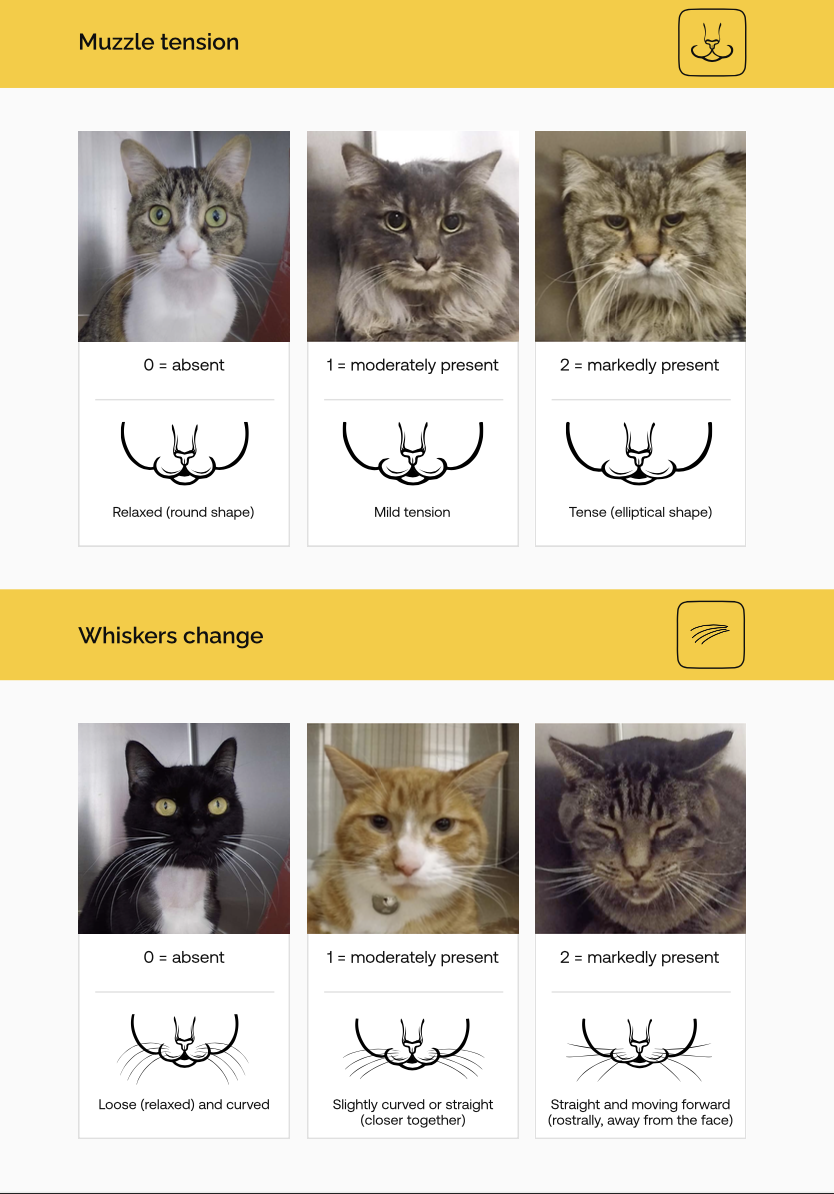
- Muzzle (mouth area)
- Whiskers
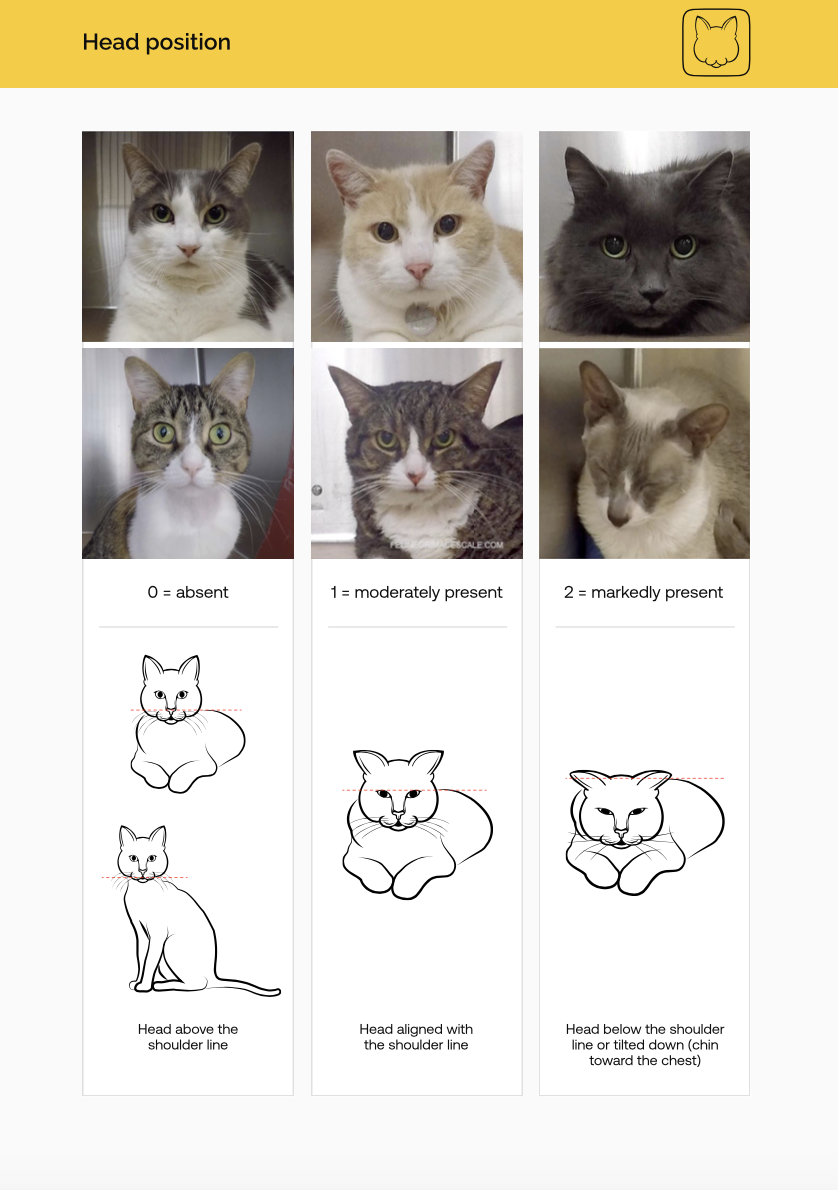
- Head position
Each one is scored from 0 to 2 depending on how different it looks from normal.
- 0 = looks normal
- 1 = slightly different / unsure
- 2 = clearly different
You then add everything up for a total score out of 10.
What different scores mean
- 0–3 → No or mild pain
- 4 or more → Pain likely
👉 For pet owners: If your cat scores 4 or higher, you should contact your veterinarian. If you don’t have one or need a trusted option, you can find trusted vets near you on Pet Pro Booking..
👉 Important: Never give human or animal pain medication without veterinary advice.
What pain can look like (in real life)
Here’s how those facial changes typically appear:
No pain (score 0)
- Ears facing forward
- Eyes open
- Face relaxed
- Whiskers loose
- Head upright
Moderate pain (score 1)
- Ears slightly turned outward
- Eyes partially closed
- Slight tension in face
- Head level with shoulders
Severe pain (score 2)
- Ears flattened
- Eyes squinting
- Tight, tense muzzle
- Whiskers pushed forward
- Head lowered or tilted down
These changes are subtle — but once you know them, you start noticing them everywhere.
How to use it properly
To get an accurate score: Observe your cat quietly for about 30 seconds
Make sure they are:
- Not sleeping
- Not grooming
- Not eating or vocalizing
Then score each facial feature.
💡 Tip: The official app can guide you step by step.
Is it reliable?
Yes — the FGS is one of the most scientifically studied pain assessment tools for cats.
Research has shown it is:
- Accurate (measures real pain)
- Consistent (different people get similar scores)
- Reliable over time
- Sensitive to treatment (scores drop after pain relief)
For pet professionals
The FGS is particularly useful in:
- Post-surgery monitoring
- Hospitalization
- Emergency care
- Pain management protocols
It provides a standardized way to communicate pain levels across teams and improves clinical decision-making.
For cat owners
You don’t need medical training to use it.
The FGS helps you:
- Recognize subtle signs something is wrong
- Advocate for your cat at the vet
- Monitor recovery at home
Think of it as a “pain detection tool” in your pocket.
Final takeaway
Cats rarely show pain in obvious ways — but their faces do.
The Feline Grimace Scale gives you a clear, science-backed way to read those signals and act early.
Because when it comes to pain: You can only treat what you can recognize.
👉 If you’re unsure whether your cat’s behavior is normal, it’s always safest to check with a professional. You can find and compare trusted veterinarians on Pet Pro Booking.